Prepare for GST InvoiceNow Compliance with the new Odoo v.20
Estimated read time : 4mins
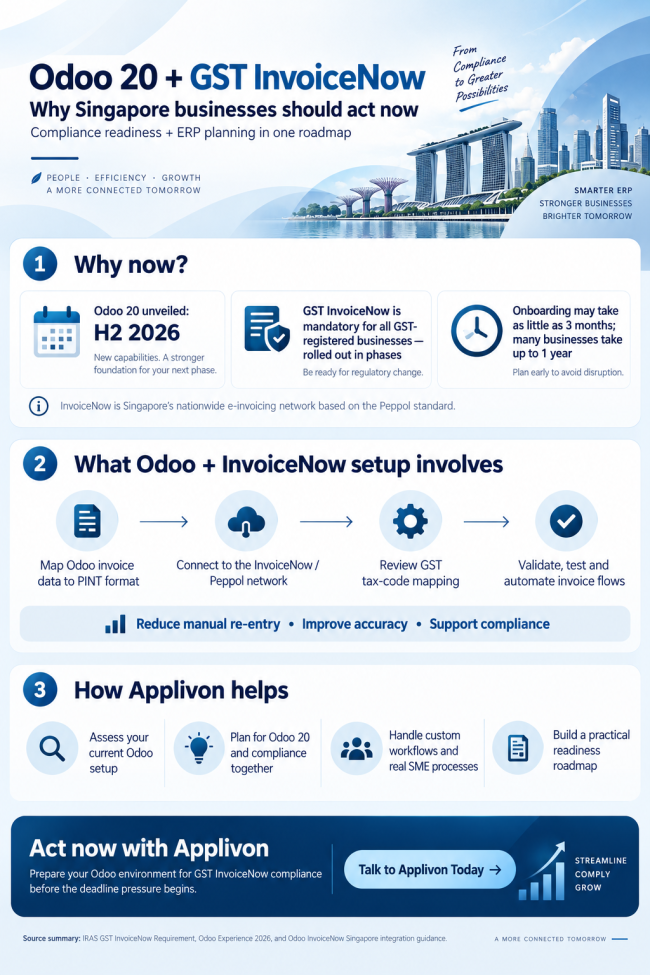
Singapore’s move towards nationwide structured e-invoicing is entering an important phase. At the same time, Odoo is releasing the latest open-source ERP version 20 – with stronger and added features that are AI engined.
What it means for SMEs now is to explore and achieve more in one transformation roadmap rather than in separate projects.
AI Workflow Automation + ERP Optimizing + GST InvoiceNow Readiness
Understanding the GST InvoiceNow requirement
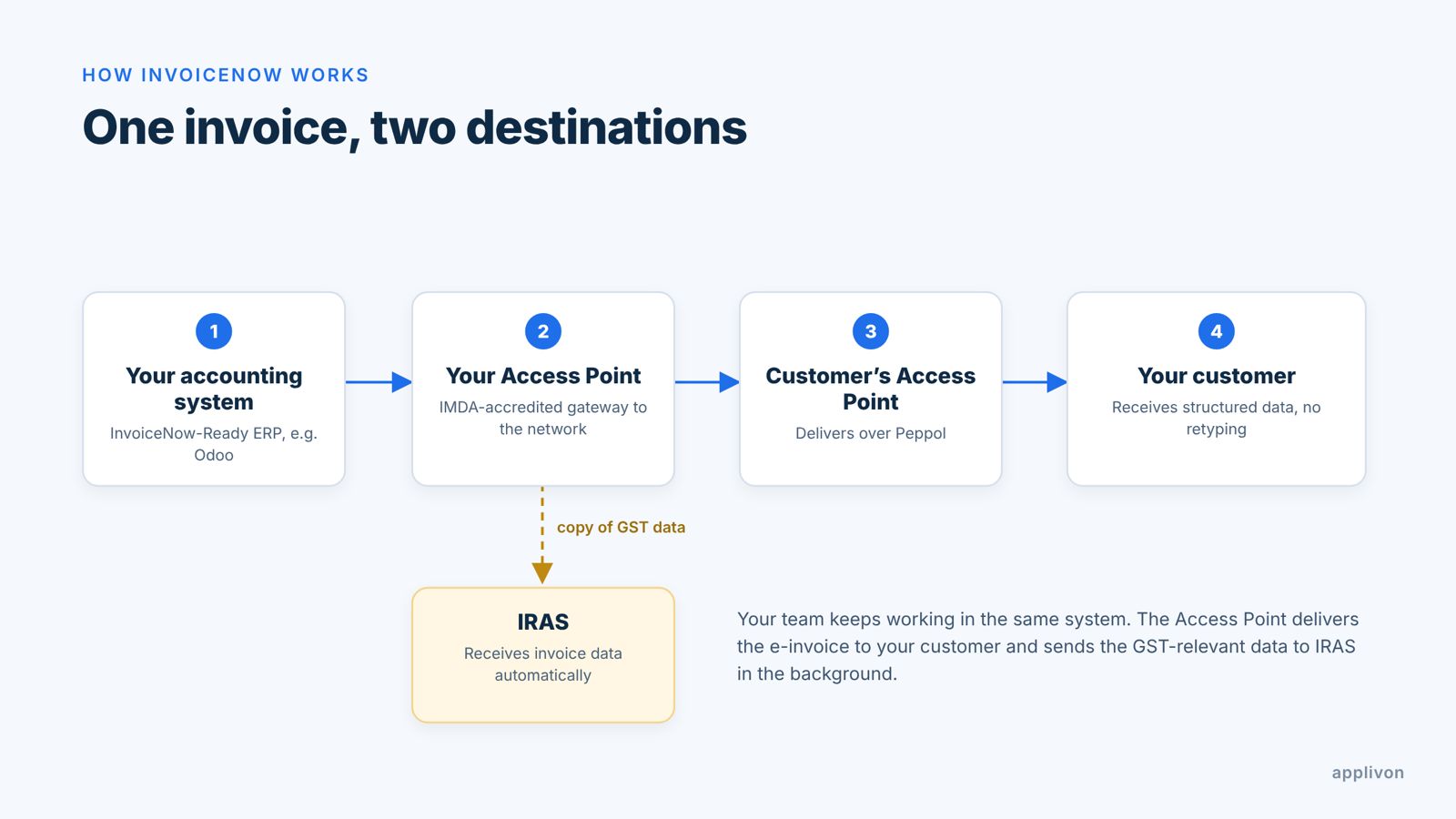
InvoiceNow is Singapore’s nationwide e-invoicing network built on the Peppol standard. IRAS states that GST-registered businesses will be required to transmit invoice data using InvoiceNow-Ready Solutions, with implementation taking place progressively.
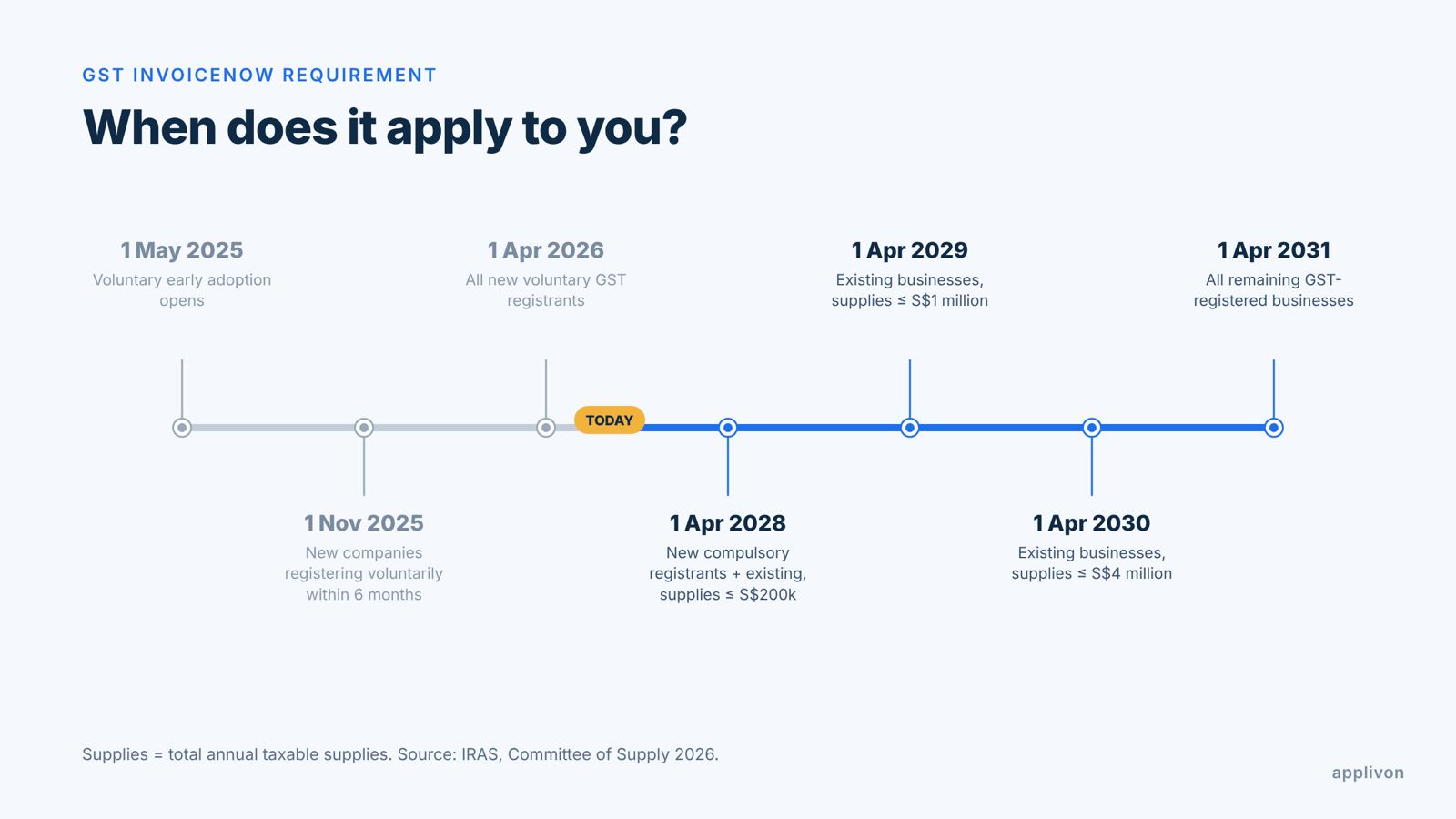
The current rollout includes:
- 1 November 2025 – certain companies voluntarily registering for GST shortly after incorporation
- 1 April 2026 – businesses applying for voluntary GST registration from this date
- 1 April 2028 – compulsory new GST registrants and certain existing businesses
- 2029 to 2031 – remaining existing GST-registered businesses progressively brought into scope according to annual supplies
The important consideration is not simply your compliance date, but the work required before that date.
IRAS advises businesses to onboard early and states that implementation can take as little as 3 months, while many organisations may require up to 12 months depending on readiness and system configuration.
What does this mean for SME planning process automation and upgrades?
For an organisation using business automation software, GST InvoiceNow should be considered as part of the broader finance and ERP architecture rather than an isolated compliance exercise.
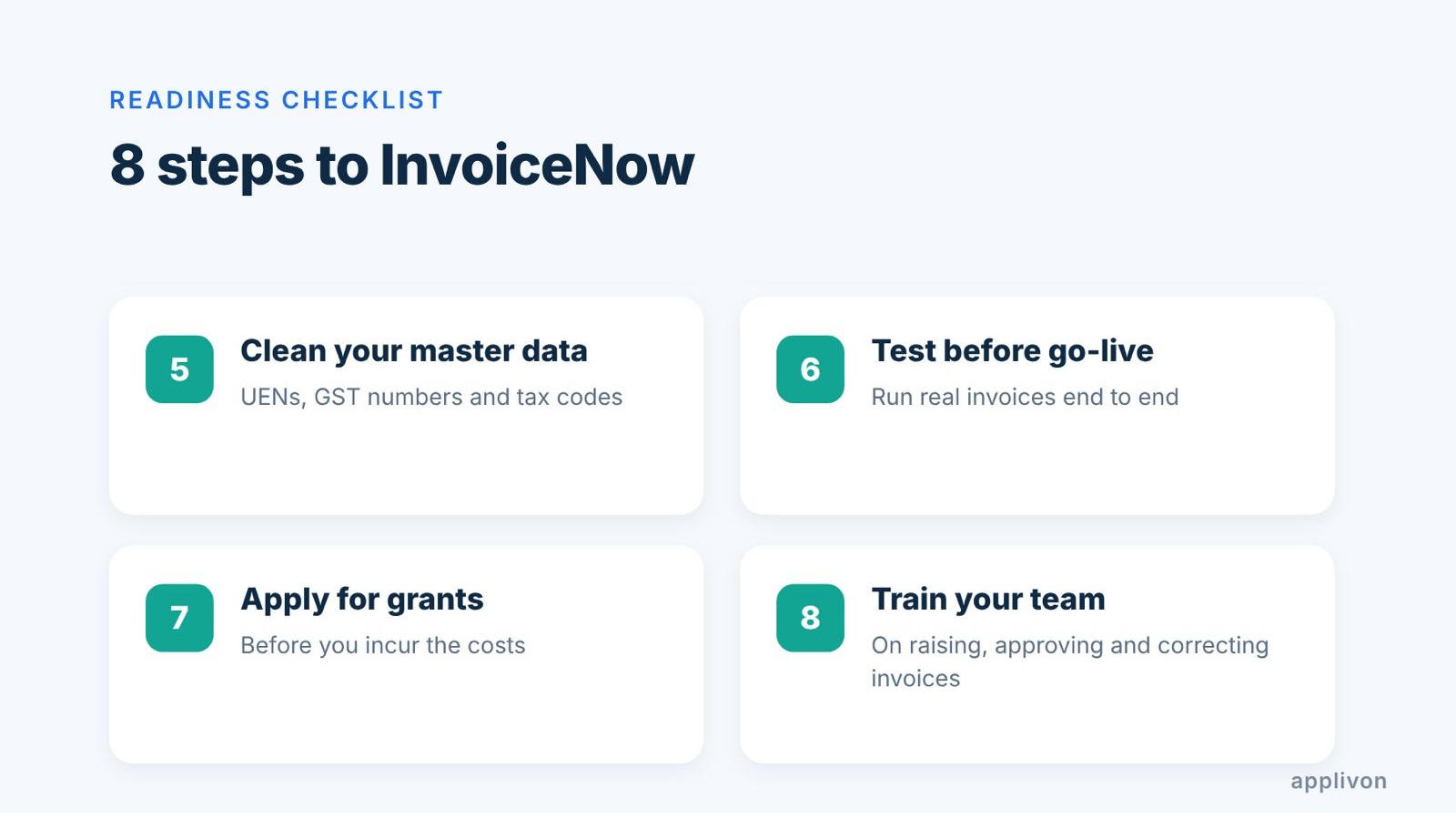
InvoiceNow integration can enable structured invoice information from Odoo ERP to be mapped and transmitted through the Peppol network. Implementation considerations can include GST configuration, PINT data mapping, Peppol connectivity, customer and supplier master data, invoice validation and testing.
For companies with customised workflows, the assessment becomes even more important.Standard accounting may be straightforward. Real businesses often are not.
Industry-specific approval flows, unusual billing structures, additional data requirements, customised sales processes and integrations with other systems can all affect the eventual solution.
Use Odoo 20 as a business-readiness milestone
The release of Odoo 20 provides a practical point for management teams to ask:
If we are reviewing our ERP for the next few years, should GST InvoiceNow readiness be part of that review now?
For many organisations, combining these conversations can be more sensible than implementing an ERP change today and revisiting the same processes again when their InvoiceNow compliance date approaches.
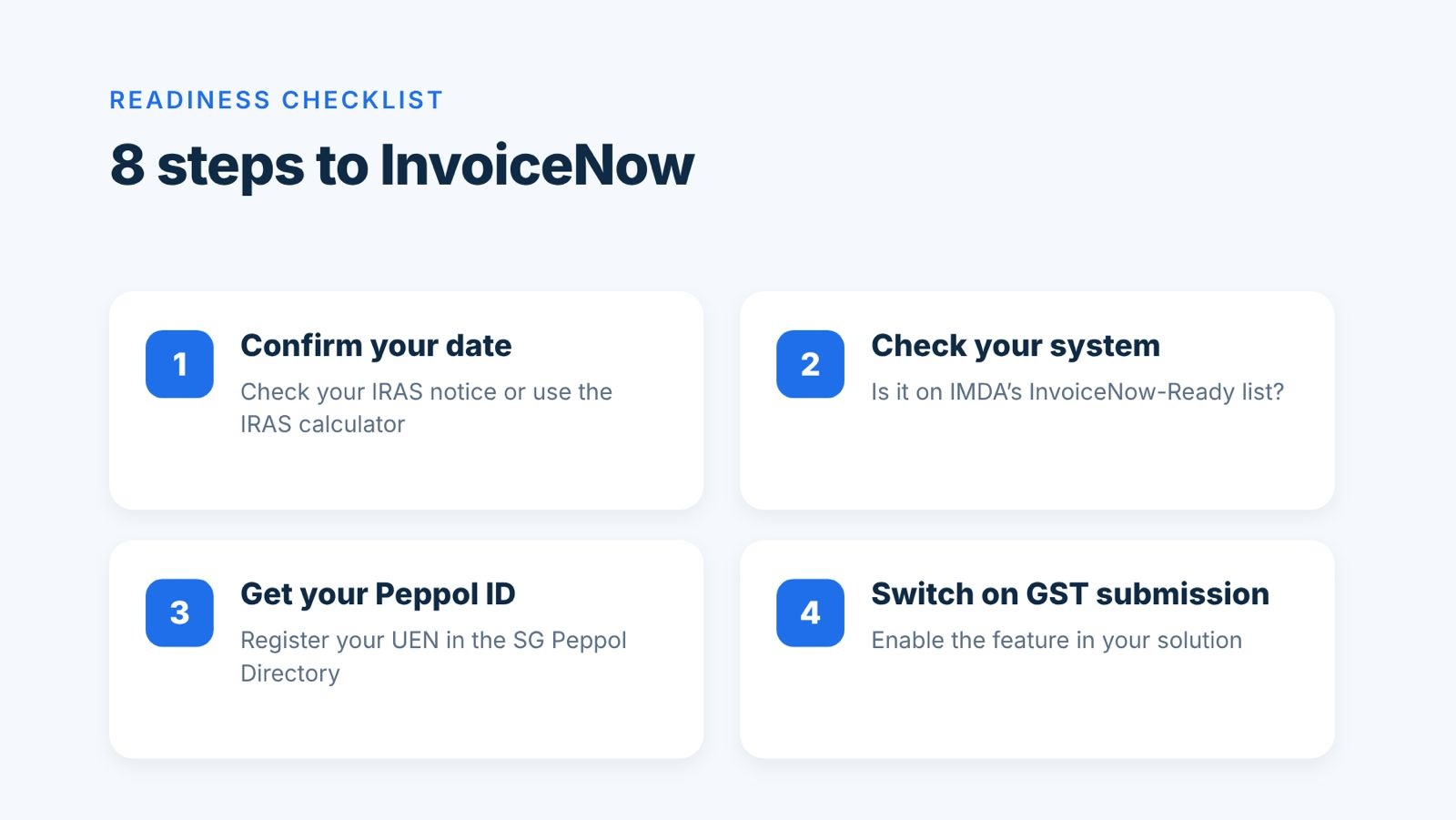
A readiness exercise can begin with four areas:
- Compliance : Understand when your organisation comes into scope.
- Process : Map how invoices are currently created, approved, issued and received.
- System : Assess the Odoo version, configuration, customisations and integrations involved.
- Implementation : Identify the appropriate InvoiceNow connectivity approach and allow sufficient time for configuration, testing and user adoption.
Implemented thoughtfully, it can become part of a wider effort to reduce duplicate data entry, improve invoice processing and create more connected finance workflows.
How Applivon can help in this compliance and transformation?
Applivon can help assess your automation environment, business processes and InvoiceNow requirements and develop a practical implementation roadmap.
Simply speak with Applivon now to start – prepare your Odoo/ERP environment early, plan your InvoiceNow journey and move towards compliance with confidence.